Smart Street Lighting Guide to LED Street Light Systems
Smart street lighting is changing the way cities, municipalities, businesses, and communities manage outdoor lighting. Modern LED Street Light Systems provide bright and efficient illumination while offering advanced control, monitoring, and automation features.
Unlike traditional street lights, smart lighting can respond to changing conditions and operational needs. With connected controls, motion sensing, remote monitoring, and energy-efficient LED technology, cities can create lighting networks that are easier to manage and maintain.
This Smart Street Lighting Guide to LED Street Light Systems explains how modern systems work, their key benefits, and what to consider when planning a street lighting upgrade.
What Is Smart Street Lighting?
Smart street lighting combines LED technology with intelligent controls and communication systems. The result is a lighting network that can be monitored and managed more efficiently.
Traditional lighting often operates on fixed schedules. Smart systems can provide greater control over when lights operate and how much light they produce.
For example, lighting levels can be adjusted according to the time of day, traffic conditions, activity, or motion. Remote monitoring can also help operators identify system issues without checking every light manually.
This approach can improve operational efficiency while helping organizations manage energy use and maintenance requirements.
Why Choose LED Street Light Systems?
LED technology is an important part of modern smart lighting. Compared with older lighting technologies, LEDs can provide efficient illumination, long operating life, and flexible control options.
Modern LED Street Light Systems can be designed for roads, highways, sidewalks, parking areas, campuses, and other outdoor spaces.
Some key benefits include:
- Energy-efficient lighting
- Long operating life
- Consistent illumination
- Reduced maintenance requirements
- Flexible dimming options
- Smart lighting controls
- Remote monitoring capabilities
- Compatibility with motion sensing
LED technology also provides design flexibility. Lighting levels, beam patterns, mounting options, and control features can be selected according to the requirements of each location.
Smart Lighting Controls
One of the main advantages of smart street lighting is improved control. A connected lighting system can allow operators to manage lighting remotely instead of relying only on manual inspections.
Smart Lighting Control can support scheduled operation and adjustable brightness levels. For example, lights can operate at a higher level during busy evening hours and use lower levels during periods of reduced activity.
Automatic controls can also help simplify daily operations. Depending on the system configuration, lighting can be controlled through timers, sensors, centralized software, or other connected technologies.
This flexibility makes smart lighting useful for both large municipal projects and smaller commercial properties.
Motion Sensing and Automatic Lighting
Motion sensing is another useful feature for smart lighting applications. A Motion Sensor Street Light can detect activity and respond by changing the lighting level.
For example, a light can operate at a lower brightness when an area is quiet and increase illumination when movement is detected.
This approach can be useful for streets, pathways, parking areas, campuses, and other locations where activity changes throughout the day.
Motion-based lighting can also work alongside other smart features. When combined with connected controls and remote monitoring, it becomes part of a broader intelligent lighting network.
Remote Monitoring for Street Lighting
Managing a large lighting network can be challenging. Maintenance teams may need to monitor hundreds or thousands of fixtures across different locations.
Remote Monitoring can make this process more efficient by providing information about connected lighting equipment through a centralized system.
Depending on the solution, operators may be able to review system status, identify potential faults, and manage lighting settings remotely.
Instead of relying entirely on physical inspections, maintenance teams can use available system information to prioritize areas that require attention.
This can help reduce unnecessary site visits and support more organized maintenance planning.
Smart Street Lighting and Security
Lighting plays an important role in outdoor visibility. Well-designed lighting can help people see roads, walkways, entrances, parking areas, and surrounding spaces more clearly.
Modern systems can also integrate lighting with security technologies. For example, a Street Light Camera can combine outdoor illumination with video monitoring in selected applications.
A connected lighting system may therefore provide more than illumination. It can become part of a broader smart infrastructure network that supports visibility, monitoring, and site management.
For applications that require additional security features, lighting, cameras, sensors, and communication technologies can be designed to work together.
Solar and Hybrid Smart Street Lighting
Smart lighting does not always need to depend entirely on traditional electrical infrastructure. Solar and hybrid configurations can provide additional installation flexibility.
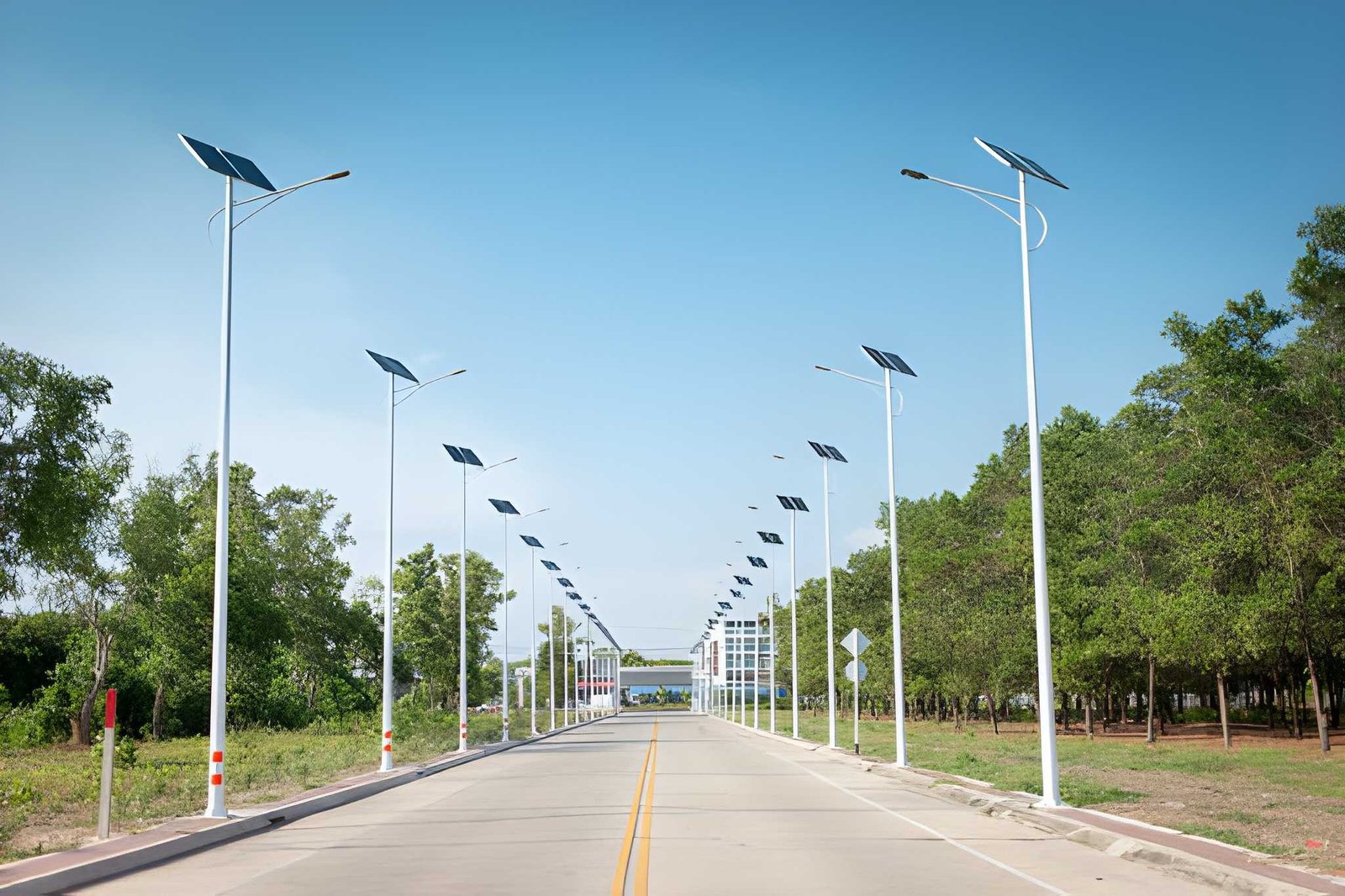
Solar Powered LED Street Lights use solar energy to power LED lighting, making them suitable for locations where extending electrical infrastructure may be difficult or costly.
Hybrid systems can combine solar power with another energy source to provide additional reliability when conditions require it.
Before selecting a solar or hybrid solution, project planners should consider sunlight availability, location, lighting requirements, battery capacity, operating schedules, and local environmental conditions.
How to Choose an LED Street Lighting System
Selecting the right system starts with understanding the application. Every road, parking area, public space, and facility has different lighting requirements.
Consider the following factors:
1. Lighting Requirements
Determine the required brightness, coverage area, mounting height, and light distribution. Proper planning helps provide consistent illumination without unnecessary over-lighting.
2. Energy Efficiency
Choose LED equipment that can provide the required illumination while supporting efficient energy use.
3. Lighting Controls
Consider whether the project needs scheduling, dimming, motion sensing, photocells, or centralized control.
4. Connectivity
For larger installations, consider how individual lights will communicate with the central management system. Wireless, cellular, or other communication options may be suitable depending on the project.
5. Monitoring
Remote monitoring can be valuable for organizations managing multiple locations. It can help teams understand system status and organize maintenance activities.
6. Future Expansion
A smart lighting network should ideally allow additional lights, sensors, cameras, or control features to be added as requirements change.
Benefits for Smart Cities
Smart street lighting can support broader smart city initiatives. Because lighting infrastructure is distributed throughout roads and public spaces, it can provide a useful platform for connected technologies.
A modern Smart Street Lighting network can support efficient illumination, automated control, remote management, and integration with other smart infrastructure.
Municipalities can also use connected lighting to improve visibility and gain better operational information across public areas.
The exact benefits depend on system design, local conditions, installation quality, and how the network is managed.
The Future of LED Street Lighting
The future of outdoor lighting is moving toward greater connectivity and automation. LED technology provides the foundation, while smart controls, sensors, communications, and monitoring add additional functionality.
As cities and businesses look for ways to modernize infrastructure, Intelligent Street Lighting can provide a practical path toward more connected outdoor environments.
The goal is not simply to install brighter lights. Instead, modern systems can provide the right amount of illumination at the right time while giving operators greater control over their lighting infrastructure.
Conclusion
A modern LED Street Light System can provide much more than basic outdoor illumination. With smart controls, motion sensing, remote monitoring, cameras, and solar or hybrid power options, lighting infrastructure can become an important part of a connected environment.
When planning a new installation or upgrading an existing network, consider lighting performance, energy efficiency, controls, connectivity, maintenance, and future expansion.
By selecting the right combination of LED technology and intelligent features, municipalities, businesses, and property owners can build a flexible lighting system designed for today’s needs and tomorrow’s smart infrastructure.